 Certified Kosher. Free Express Shipping.


What makes a real New York City Bagel?
In the world of dining, few items command as much reverence as a real New York City bagel…
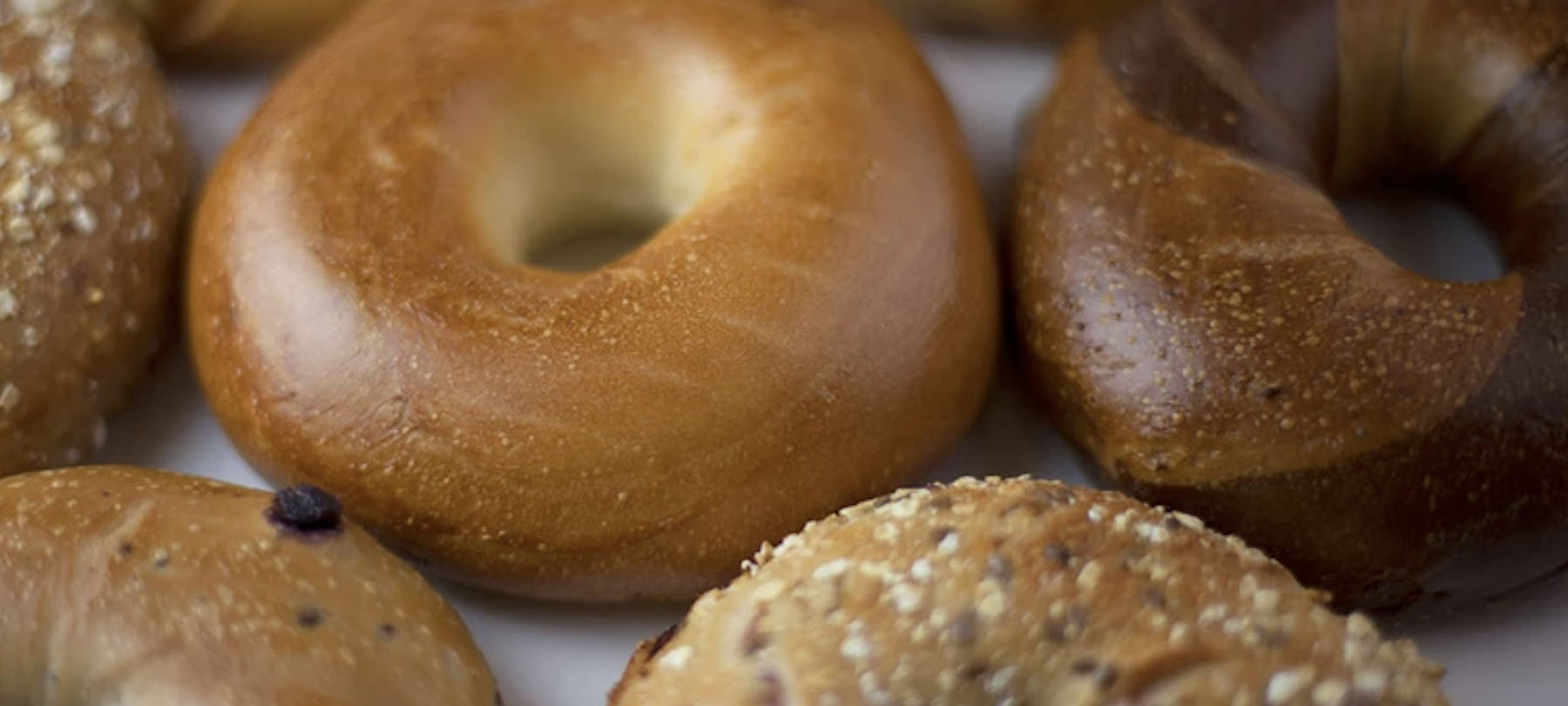
Far from the soft, bready rolls found in grocery store, a true NYC bagel is defined by a dense, chewy interior and a crisp, high-shine crust. The secret to this perfection lies in a rigid adherence to a century-old process brought to the city by Eastern European immigrants.
The Process: Flour to Oven
Creating an authentic bagel is a labor-intensive, multi-day affair that cannot be rushed by automation.
The Dough: It all begins with high-gluten flour, salt, yeast, and water. A critical addition is malt syrup, which provides a deep, earthy sweetness and helps the crust brown during baking. Real bagel bakeries never rely on shortcuts like bromated flour.

Manual Processing: Traditional shops still roll their dough. Instead of just punching a hole in a ball, rollers stretch the dough into a "snake" and wrap it around their hand to seal the ends, creating a tight structure.

Cold Fermentation (also called Proofing): This is the "secret sauce" of New York bagel flavor. The shaped dough is refrigerated for 12 to 48 hours. This slow fermentation allows the yeast to develop a complex flavor that factory bagels simply lack.

Kettle Boiling: Before hitting the oven, New York bagels are submerged in a boiling water bath for a minute. This "pre-gelatinizes" the starch on the surface, locking in moisture and creating the signature leathery, shiny crust. Again, supermarket bagels typically skip this step.

The Bake: Traditional NYC bagels are baked on wooden planks. They are flipped off the boards directly onto the hot oven floor halfway through to ensure the bottom gets just as crisp as the top.

Why are NYC Bagels Considered the Best?
While locals often point to New York City tap water as the reason for their supremacy, science suggests a more nuanced story.
Water Chemistry: NYC water is "soft," meaning it has very low concentrations of calcium, magnesium and other minerals. This prevents the gluten from becoming tough, contributing to the bagel's tender-yet-chewy appeal.
NYC water also comes from pristine reservoirs located to the north of the city, so it's free of contaminants and requires less chlorination than other places.
Unwavering Tradition: Many bakeries outside New York skip the boiling step, using steam-injection ovens instead. This produces a lighter, puffier product that New Yorkers mockingly call "bread with a hole".
High Standards and Lotsa Competition: In a city where a bad bagel can lead to a shop closing within months, the sheer density of expert bakers keeps the quality floor exceptionally high.
Look for the Hole: Nowadays, you probably see many so-called bagels with little, if any, hole in the middle. Instead, the dough in the center sinks in, touching the other sides. This is NOT a real bagel. A real New York bagel will also have a quite discernable hole. Always.